What Is Voice Cloning Technology?
Voice cloning is an AI-powered process that creates a digital replica of a person's voice. Using just a short audio sample, modern voice cloning systems can learn the unique characteristics of a speaker's voice and generate new speech that sounds virtually identical to the original. The cloned voice can say anything typed into the system, maintaining the same tone, pitch, cadence, and emotional quality as the real speaker.
Unlike traditional text-to-speech systems that use generic, robotic-sounding voices, voice cloning produces output that captures the individual nuances that make each person's voice unique. The technology has reached a point where cloned voices can be nearly indistinguishable from real recordings, even to people who know the original speaker well.
How AI Voice Cloning Works
The voice cloning process involves several sophisticated AI techniques working together. Understanding these stages helps appreciate both the power and the complexity of the technology.
Sample Analysis
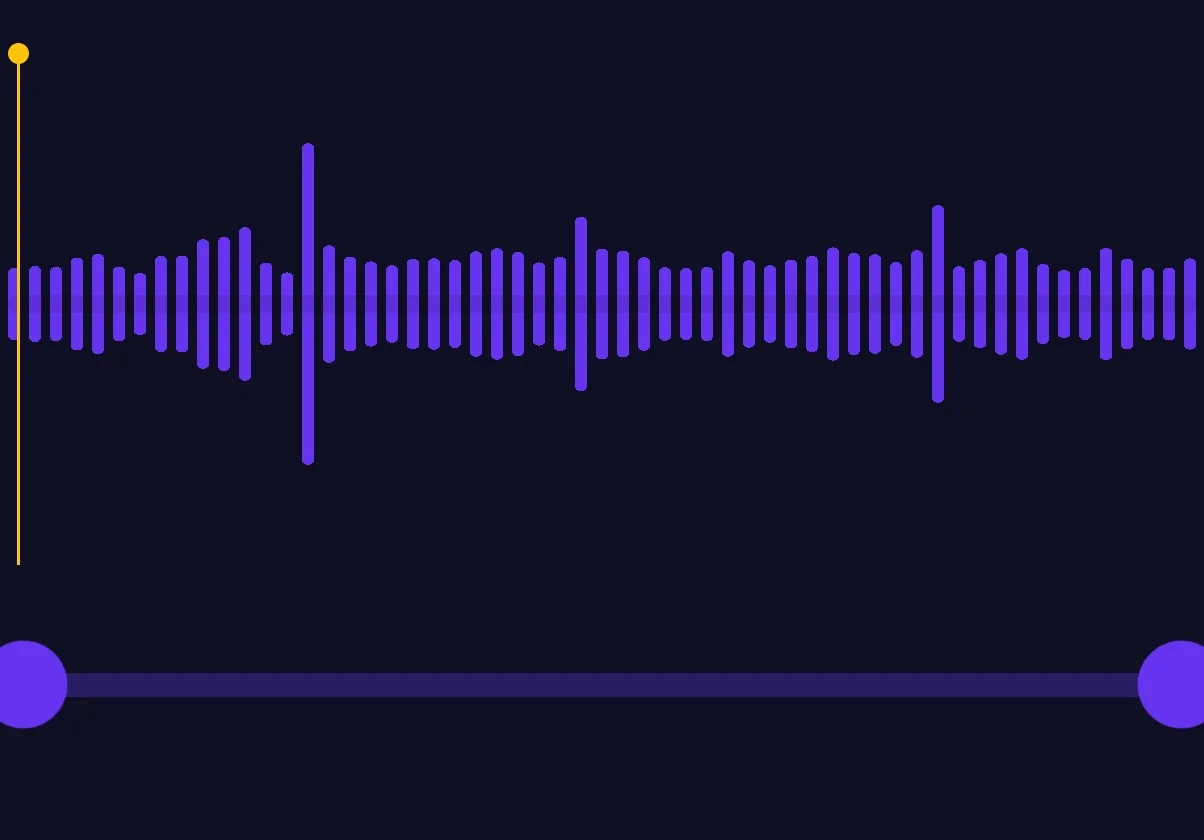
The process begins when you provide an audio sample of the target voice. The AI analyzes this sample to extract a comprehensive vocal fingerprint. This analysis captures hundreds of acoustic features including fundamental frequency patterns, formant structures, spectral characteristics, speaking rhythm, breath patterns, and micro-variations that give a voice its distinctive quality. Modern voice cloning systems can work with remarkably short samples, sometimes as little as 10 to 30 seconds of clear speech.
Voice Embedding
The extracted features are compressed into a compact mathematical representation called a voice embedding. Think of this as a detailed recipe that encodes everything the AI needs to know about how this particular person sounds. This embedding captures not just what the voice sounds like on average, but how it varies across different phonemes, emotional states, and speaking contexts.
Neural Synthesis
When you type new text, the voice cloning system combines the voice embedding with a text-to-speech pipeline. A neural network generates audio that follows the speech patterns encoded in the embedding while articulating the new content. Advanced models use attention mechanisms to ensure that prosody, emphasis, and emotional tone are applied naturally across sentences, not just word by word.
Waveform Generation
The final stage converts the neural network's output into a high-fidelity audio waveform. Modern voice cloning systems use neural vocoders that produce audio at 24kHz or higher sampling rates, capturing the full richness and detail of natural speech. The result is a clean, professional-sounding recording that's ready for immediate use.
Ethical Considerations and Responsible Use
With great power comes great responsibility, and voice cloning is no exception. The ability to recreate someone's voice raises important ethical questions that both developers and users must take seriously.
Consent and Authorization
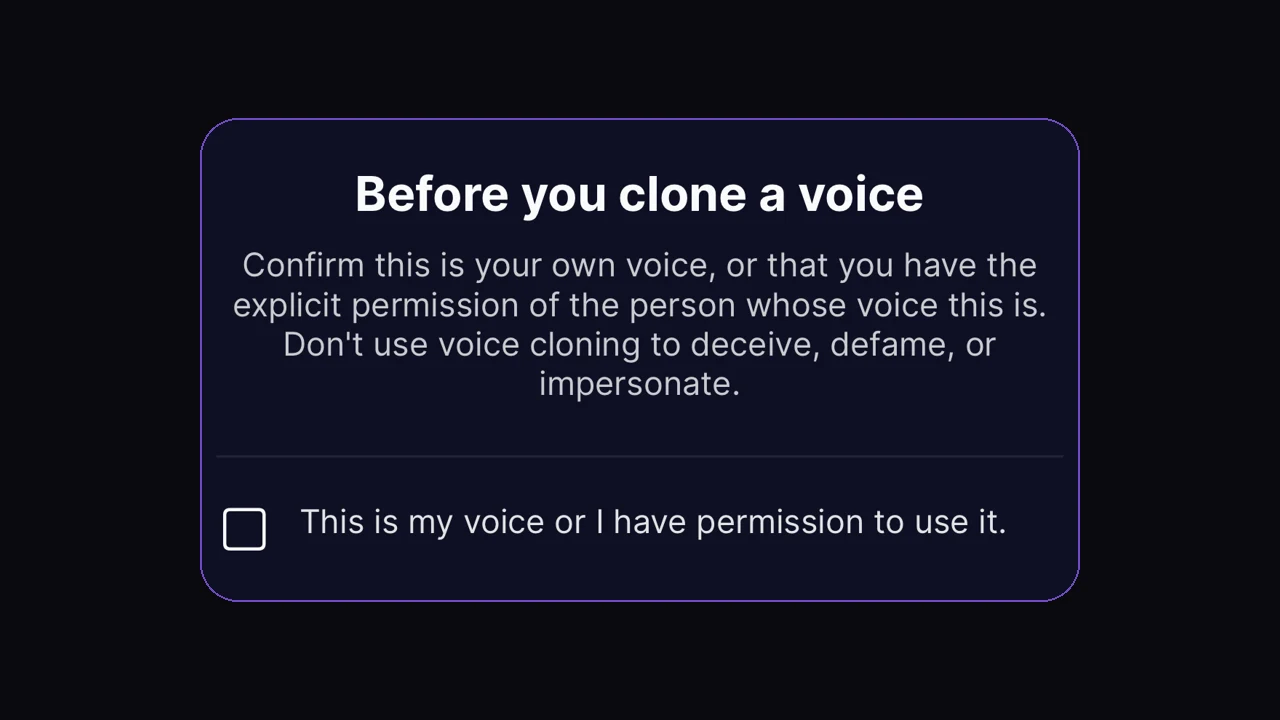
The most fundamental ethical principle of voice cloning is consent. Cloning someone's voice without their knowledge or permission is a violation of their personal rights. Responsible platforms like Echo require users to confirm they have authorization to clone any voice they submit. This applies whether you're cloning your own voice, a colleague's voice for a business project, or any other speaker.
Preventing Misuse
Voice cloning technology could potentially be misused for fraud, impersonation, or creating misleading content. The industry has responded with technical safeguards including audio watermarking, deepfake detection tools, and usage monitoring. Echo embeds invisible watermarks in all cloned voice output, making it possible to identify AI-generated audio even when it sounds completely natural.
Transparency
When using voice cloning in content that will be shared publicly, transparency is key. Audiences should be informed when they're hearing an AI-generated voice rather than a real recording. This transparency builds trust and helps maintain the integrity of audio content across media.
Voice cloning technology is a tool, and like any tool, its impact depends on how it's used. At Echo, we believe that responsible innovation means building safeguards directly into the technology, not treating them as an afterthought.
How Echo Handles Voice Cloning with Privacy Safeguards
Echo takes a privacy-first approach to voice cloning that sets it apart from competitors. Here's how the platform protects users and their voice data:
- End-to-end encryption: All voice samples uploaded for cloning are encrypted in transit and at rest. Your vocal data is never exposed to unauthorized access.
- No third-party sharing: Echo never sells, shares, or licenses user voice data to third parties. Your voice profile stays exclusively under your control.
- On-device processing: Where possible, voice cloning computations happen directly on your device, minimizing the data that needs to leave your phone.
- User-controlled deletion: You can permanently delete any cloned voice profile at any time with a single tap. Once deleted, the data is purged from all systems.
- Audio watermarking: All voice cloning output includes an invisible digital watermark that identifies it as AI-generated, supporting authenticity verification efforts.
- Consent verification: Echo's terms require users to confirm they have proper authorization before cloning any voice, with violations subject to account restrictions.
Use Cases: How Voice Cloning Is Transforming Industries
Personalized Content Creation
Content creators use voice cloning to maintain a consistent vocal presence across their work. A YouTuber can clone their own voice to generate narration for videos when they can't record, or a podcaster can create voice cloning previews for upcoming episodes. The technology lets creators produce more content without being physically present for every recording session.
Brand Voices and Marketing
Businesses are using voice cloning to create distinctive brand voices that remain consistent across all customer touchpoints. A company can develop a signature voice for its IVR system, marketing videos, app interfaces, and customer communications. Once the voice is cloned, generating new content is as simple as typing a script, saving significant time and cost compared to booking voice talent for every project.
Accessibility and Medical Applications
Perhaps the most meaningful application of voice cloning is in accessibility. People diagnosed with conditions that may affect their speech, such as ALS or throat cancer, can bank their voice before it changes. Voice cloning then allows them to continue communicating in their own voice through assistive devices. This application alone justifies the ongoing development and refinement of voice cloning technology, giving people the ability to preserve a fundamental part of their identity.
Entertainment and Media
The entertainment industry uses voice cloning for dubbing films into multiple languages while preserving the original actor's vocal qualities, creating audio content for characters in games and animations, and producing audiobook narrations with consistent voice quality across hundreds of hours of content. Voice cloning makes these workflows faster and more affordable while maintaining high production standards.
Education and Training
Educational institutions use voice cloning to create engaging learning materials with consistent narration. Training programs can feature a familiar instructor's voice across all modules, even when new content is added months or years later. Language learning apps use voice cloning to provide pronunciation examples in diverse accents and styles.
The Future of Voice Cloning
Voice cloning technology continues to advance at a remarkable pace. Several trends are shaping where the technology is headed:
- Real-time voice cloning: The latency between input and output continues to shrink. We're approaching the point where voice cloning can happen in real-time during live calls and conversations, opening up new interactive applications.
- Emotional intelligence: Future voice cloning systems will better understand and replicate emotional nuance. A cloned voice will be able to convey sadness, excitement, sarcasm, or warmth with the same subtlety as the original speaker.
- Multilingual cloning: Emerging models can clone a voice in one language and use it to speak fluently in another, maintaining the speaker's unique vocal characteristics across languages they may not actually speak.
- Tighter ethical frameworks: As the technology matures, expect more standardized regulations and industry guidelines around consent, disclosure, and permitted uses of voice cloning.
Voice cloning is not just a novelty. It's a transformative technology that's reshaping how we create, communicate, and preserve human expression. With responsible platforms like Echo leading the way, the future of voice cloning is one that empowers individuals and businesses while maintaining the ethical standards that protect us all.
Experience Voice Cloning with Echo
Clone any voice with just a short audio sample. Privacy-first, professional quality. Download free today.
Download Echo Free